The Simple Test That Will Tell You How Compelling Your First Chapter Is

deathIf you think the first chapter of your novel could use some improvement, there’s one simple test that can tell you how to make it better.

Kill the main character at the end of your first chapter.

This will tell you how compelling your first chapter is.

Write something like, “Jim slips off the bridge and falls to his death.”

Now your main character is finished. He can’t achieve any of his goals.

Next, list out all the consequences that come into effect since the main character can’t achieve their goals.

If the list is short and lacklustre, it’s a good sign that your first chapter has room for improvement.

The consequences matters because they give the reader an idea of what’s at stake. The larger the stake, the more compelled your reader will be to find out what happens next.

A great example is Katniss Everdeen from Suzanne Collins’ The Hunger Games.

Let’s kill her at the start of the novel and see what happens.

“The train to District 1 crashes and Katniss Everdeen dies.”

Now what consequences come into play if Katniss can’t accomplish her main goal?

Main Goal:

  • Take her sister’s place in The Hunger Games and survive.

Consequences:

  • Primrose will be taken to The Hunger Games instead and Primrose will surely die because she’s young and doesn’t possess any archery skills like Katniss.
  • Gale will be heartbroken now that his crush is dead.
  • Peeta will be heartbroken now that his crush is dead, plus he’s going to die himself in The Hunger Games without any purpose to live any more.
  • Katniss’ mother will likely have a heart attack because Katniss is dead, and now Primrose will be sent to The Hunger Games and die too.

The consequences of Katniss’ death are very high and the reader doesn’t want any of those things to happen. The reader eagerly turns each page to find out what happens next, because Katniss must accomplish her goal above all cost.

A great thing about this test is that you can keep killing your main character at the end of each chapter to see if the consequences are still high enough to keep the reader engaged.

As in The Hunger Games, each chapter proves to test Katniss’ ability to survive and raises the consequences even higher:

  • Katniss becomes a symbol of hope to all the Districts, she can’t die!
  • Katniss respects Rue’s death, she can’t die, because of the huge emotional pull Katniss’ action has on the reader now.
  • Katniss develops conflicting feelings about Gale and Peeta, the reader must know who she chooses.
  • etc.

A lot of emerging authors don’t realize that the consequences must be clear from the start. It’s why most first-time novels don’t make it. It’s why mine didn’t.

When I finished my first novel, The Moon King, I used the first few chapters to introduce the setting, characters, and the main character’s goal, but I didn’t spell out the consequences until later chapters.

The initial feedback I got was very telling. It was to the effect of, “The first half is boring and drudges along, but the second half is super exciting and I couldn’t stop reading.”

Now that I’ve learned about building up consequences right away using the “Kill the main character” test, I’m editing my first few chapters to be much more compelling.

If you think that your first chapter could use some improvement, simply kill the main character and list out the consequences that you’ve written about so far.

If there aren’t many, or they aren’t very high, then you may need to do a rewrite.

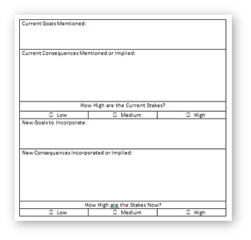
Here’s a simple template you can use to do the test on your chapters (it’s a downloadable word doc)
kill-the-mc-test

Happy writing!

Subscribe to my email list to receive my newsletter and writing tips in your inbox.

Go back

Your message has been sent

Warning
Warning

Warning.

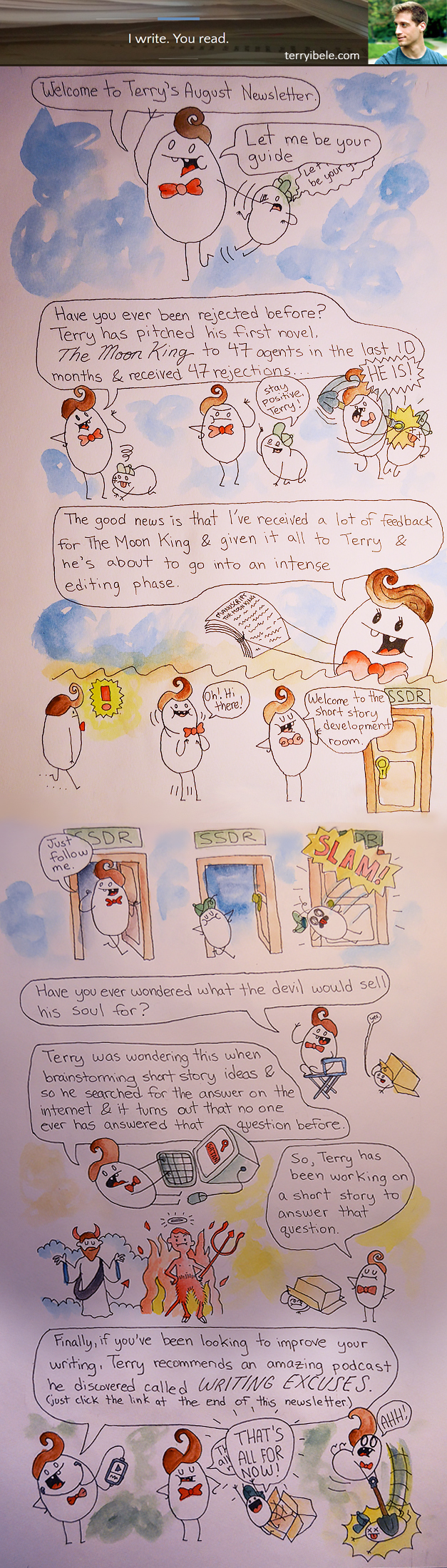
Terry’s August Newsletter

Here’s another watercolour newsletter this month!

August 2016 final2.jpg
(here’s the link to last month’s newsletter)

Here’s the link to the Writing Excuses podcast.

That’s all this month. Enjoy the rest of the summer.

From Terry!

Subscribe to my email list to receive my newsletter and writing tips in your inbox.

Go back

Your message has been sent

Warning
Warning

Warning.

What if you came home and your crippling debt had materialized into a fat, balding man, surfing infomercials from your couch?

That’s what happens in the absurd novel I’m working on!

CHAPTER  1

Bert Blaxon fidgeted with his glasses, something he always did when he was getting yelled at. He was worried, as usual, about losing his job.

“Bert, come see me!” screeched Fernillipy from the other end of the office.

Bert jogged from his desk and down the hallway. This is it, he thought.

The walls of his boss’s office were painted in a suffocating shade of beige and perfectly fit with the tired mustard metal desk. The small window to the back hid behind a cracked set of purple venetian blinds, and for whatever reason, his boss had papered one wall in red and brown plaid wallpaper. The last time this office had been gloriously refurbished was six years ago, which also happened to be the same amount of time another glorious refurbishing was due. Every second an emergency interior designer wasn’t called in lay greater offense to any innocent pair of eyes unfortunate enough to witness the insides of this office. And very unfortunately, Bert’s eyes weren’t very innocent. They had been exposed to these horrendous surroundings more than any other office lackey.

Not two seconds of visual offense had passed and Bert’s boss, Fernillipy, was already barking her insults at him. She was always looking for any minute reason to get rid of Bert, and today she had found one. Her lips flapped so fast that her spit nearly formed the words she spewed at his face. Needless to say, Fernillipy had the personality of a steaming pile of sludge.

Fernillipy herself was an offensive sight. Her black, scraggly hair had likely never seen a comb and was currently featured on the front page of Rat’s Nest Magazine. Her most upsetting feature was that she was always frowning. So often that it looked as if someone had permanently wrapped an elastic around her eyes, nose and mouth.

Bert had often wondered how Fernillipy, with her incompetence the size of a manatee, had even been hired in the first place. He supposed that all the other applicants had taken one look at the lack of opportunity of the position and promptly fled. The only thing Fernillipy wasn’t incompetent in was micromanagement. Regrettably for Bert, he was the only one she managed and she took full advantage of her only skill, even going so far as to keep a microscope on her desk as a constant reminder. She had been so successful at micromanaging Bert that he hadn’t been able to learn any greater skills than relying on Fernillipy for every decision. Because of this, he had no hope for ever finding another job. Who would want somebody from Superdump’s Marketing department who had been there for nearly six years and not gained a single skill?

“Bert, you gangly, needle-nosed chimp.” She held up the 50 page slide deck that Bert had stayed up till 3:00 AM to finish. “You spelled Footnote wrong in the footnote on page 4. You’re about as competent as a fistful of worms in a cheese soufflé.”

Bert parted his chapped lips. He wanted to retort. Badly. But, his nerves weren’t strong enough to deal with her wrath. They were hardly as strong as a two-pound chicken. Instead he resorted to just thinking about his retort. I didn’t even write that footnote! Bert screamed at Fernillipy within his mind. I pasted it from another presentation that YOU wrote. Even though his thoughts were confident, they had hardly any effect on his nerves, which were currently in a ring with a two-pound chicken (and losing mind you). Instead, Bert diverted his gaze from the elastic-wrapped, scrunch-face of his boss and caught a glimpse of his reflection from the glass plate of the microscope on her desk. A sorry-looking face with unkempt brown hair and green eyes looked back at him. I’m not a needle-nosed chimp, he thought and went back to fidgeting with his glasses, adjusting them around his ears.

“Don’t look away from me when I’m talking to you, you feeble, pie-faced telephone pole,” Fernillipy barked so loudly, Bert had to dodge the hurling insult of spit, and his glasses fell off.

Now Bert couldn’t see much, which made his need to fidget even worse. She’s going to fire me. His hands naturally went for the next closest thing, his red tie. In seconds he had fidgeted away the weak knot. The whole thing unravelled and fell to the floor. Unsure of what to do next, Bert’s hands went all jazz for a moment, before they found the buckle of his belt.

“Out of my office, and reprint the whole deck, or pack your things!”

Bert scooped up his accessories from the floor, snatched the 50 page deck, and fled like a turtle without its shell.

Rounding the office hallway, Bert tripped over something and planted his nose face first into the floor.

“Sorree,” said Clumsy in a cutesy voice.

Bert rolled over onto his back and looked up at Clumsy, who retracted her foot. She blew a big, pink bubble while she twirled one of her pigtails with a finger. She wore her usual extra large pink sweater, which hung loosely on her thin frame all the way down to her knee-high green socks. The bubble burst and she used her tongue to scrape the gum off her nose and back into her mouth.

“You do enjoy yourself,” replied Bert, sitting up and collecting the papers of his presentation.

“Yup!” replied Clumsy and she turned and skipped down the office hallway.

“Who let her in here?” yelled Bert, looking around to see if anyone else had noticed, but everyone was too busy businessing to pay any attention. Bert stood up, pushed his glasses to the top of his nose and tucked the presentation under his arm. He retreated to his brown cubicle in the corner of the office.

“How was the daily beating?” Nate Quimbleton’s tall frame dwarfed Bert’s. He slung his hand over the partition of Bert’s cubicle and took a sip of his coffee. The mug said, “Mondays, Baby”.

“Not bad this time. At least I didn’t fidget the buttons off my shirt like yesterday.”

“Bert, I tell ya, you’ve gotta take kick boxing classes or something, get your nerves in order. You’re never gonna climb the corporate ladder getting pushed around like that.”

“How’s your own climb going?” said Bert, entirely uninterested and looking at his nails. One of them was developing a bad case of hang and Bert made a mental note to sort it out later.

Nate slackened his posture. “Heh, I’ve only been here five months, unlike you.”

“Well, I’m not going anywhere unless I can appease Fernillipy.”

“That’s impossible. You know that. You’ve been living on the edge of her wrath since you started here.”

“Yeah, but pleasing her is the only way I’ve been able to keep my job. One big slip up and she’ll fire me. She’s been looking for excuses.”

“Why not just quit? There’s not a boss in the world as bad as her.”

Bert sighed to himself and imagined quitting, but the ambiguity of Unemployment really unsettled him.

“I can’t. Crippling Debt would ruin me. I need this job to keep him at bay.”

Nate stared blankly at Bert for a moment. “I dunno, Berty boy, Every day I see you sigh all over the place. Isn’t there something you’re better at doing?”

“I grow thyme in my apartment.”

Bert visualized the thirteen varieties of thyme he grew in mason jar pots in his apartment window. Every night he tended tenderly to them. He was trying to develop a thyme for tea.

“Strange.” Nate took a sip of his mug.

“Kay Nate, sorry, but I gotta get to work, Fernillipy’s presentation is tomorrow.”

“Why aren’t you presenting? You practically wrote the whole thing!”

Bert stared at the slide deck in his hands. Superdump Trash Growth Strategy read the first page. Combat Tactics from Slumping Sales. He flipped through the pages till a blaring red circle screamed at him from the footnote on the bottom of page 4. “Yeah, except for a few footnotes…”

“Tough,” said Nate, unconsciously picking his nose.

Bert flipped through the rest of the deck. The last page had a personalized note to him, also in red ink.

Dear Bert,

Tomorow is your 6 year aniversary with Superdump. Congradulations. I have no idea how an incompatent lacky like you has slipped throu the cracks this long, and I’ve regretted hiring you since the moment I hired you. However, after I present your completily rubish Trash Growth Strategy to the board tomorrow, I can guarentee you they will be the opposite of impressed. Better start looking for some referinces, because I certenly won’t be giving you one. It’ll be a relief to know I’ll finally have grounds to get rid of you. Consider this heads up a faver.

Sincerely,

Fernillipy

“That sucks,” said Nate.

***

Bert hung his coat next to the door and waved to Crippling Debt, which was flipping away at the TV and reading the newspaper.

Bert’s bachelor pad was the prettiest thing four walls could muster – a kitchenette, a retractable bed-sofa, a milk crate desk, and a hand-me-down love seat from his mother, which Crippling Debt was currently occupying. The window, which looked as if it has been forced into the wall, faced the beautifully glistening Lake Ontario. However, another apartment building had been built a mere twelve feet away, and obstructed any beautifully glistening views. The thirteen mason jars sat on its sill. Bert had packed them tightly with his own concoction of potting soil, nitrogen, foam balls, eggshells, and mint tea bags. The whole hobby had only cost him eighty-seven dollars, which he had saved from picking up loose change on the his way to work every day.

Bert opened the fridge to grab a slice of pizza from yesterday’s takeout, but came back empty handed.

“Sorry,” muttered Crippling Debt.

Bert looked up at his Crippling Debt. The large, balding man was wearing a soiled, but expensive suede, purple suit. Crippling Debt leaned forward to take a long, drawn out sip from the extra large take-out cup of soda that he was balancing on his enormous stomach. His face was stained with pizza sauce. Bert rolled his eyes and let out a sigh as big as a potato. This day just can’t get any worse, so I might as well get it over with. Bert pulled out the bed from the sofa chair and promptly went to it. “Mind turning out the lights?”

“No problem,” replied Crippling Dead as he flipped the newspaper to see the next headline of the Business section. It read, Superdump’s Trash Rubbish.  “Hey, your work is sucking.”

“I know, trash just isn’t as easy to sell as it used to be.”

“Don’t you have some growth strategy thing to present tomorrow?”

“Yeah… Fernillipy’s presenting it.”  said Bert.

“Well, maybe you should talk to her about presenting it yourself tomorrow?”

“I don’t want to talk to her tomorrow, or ever again. I just want to go to sleep and never wake up. Now, night.” He pulled up his comforter.

Crippling Debt looked to the window. “Aren’t you going to tend to your thyme?”

Bert didn’t reply. Crippling Debt shrugged. An infomercial about ten-payment 1,000 thread-count ankle socks had just come on.

Bert had long ago lost his control over Crippling Debt and sighed the size of a radish. He rolled over to face the window and counted the bricks of the adjacent building while thinking about how much he hated Fernillipy. Both topics were equally boring, plus his neighbour was doing tai chi in the nude, and so he entered Dreamland in twenty seconds flat.

Now, I must interrupt the story to tell you something. Wait, who am I, you ask? Just the little voice in the back of your mind that’s reading this story to you, don’t worry too much about it, I don’t have any alternate agendas.

What I must tell you is that this is one of those stories where the main character awakes at the end and realizes that all his adventures have just been a dream. I thought I’d tell you this upfront so you’re not completely underwhelmed at the end by any obvious clichés. So let’s just hash that out now and get it over with.

Now, the reason why Bert can’t just wake up any time soon is that he’s actually stuck in his dream, mostly because he forgot to dream about an exit door to the real world. Of course there are many ways to exit a dream, but dreaming of an exit door is the easiest way. In fact, since dreams are made up of pure imagination, nearly anything can happen. That is, anything but the Queen of England showing up. She’s so tired of appearing in people’s dreams to do that little hand wave of hers, that’s she’s negotiated a cease and desist. It’s now impossible to dream about her, however that works. Other than that, the world is your oyster, or as they same in Dreamland, Your dream is an elephant. No one’s really sure why that’s the saying, but it’s managed to stick.

Okay, let’s get back to Bert. Besides failing to dream up an exit door, the main problem with Bert is that his thoughts are so dull that his Imagination got fed up and squeezed itself out of his mind to go on a permanent vacation on Mars. Because of this, all Bert ever dreams about are a desk and a chair, which he sits at until his body decides to wake up. He just sits quietly through everything and waits.

It was 3:00am in the real world and Bert could be found lying peacefully in bed. The covers were pulled exactly up to his chin and each of his hands were placed daintily at his sides. Tucked in bed beside Bert lay a tattered old stuffed goat. Bert’s mother had placed the stuffed animal in Bert’s crib and since then the two had been inseparable. Everybody has that one belonging they carry with them from childhood—a favourite blanket, a plaster handprint, or a first soccer trophy. For Bert, it was his stuffed goat.

The knocker at the door sounded and Crippling Debt stepped over Bert to sign for the twin earlobe massagers he had ordered. He took the package and in his haste to open it, left the door unlocked.

Meanwhile, in Dreamland, Bert was patiently waiting at the desk he had imagined and began biting at a hangnail on one of his fingers. Even though he had no inclination of wanting to be at, or go to work ever again, he was dressed in his usual business attire – light blue dress shirt, tired gray dress pants, black leather belt, faded red tie. This was how Bert dressed most mornings, so it was also the easiest way to dream about how he was currently dressed. Bert took a break from biting at his hangnail to push his glasses to the top of his nose. Even in his dreams he couldn’t see very well, which was a tad ironic considering he wasn’t dreaming about anything to see. He was staring at nothing but a lot of black space. As soon as Bert began biting his hangnail again, something new happened.

His desk quivered.

Bert pretended not to notice.

The desk quivered some more and began to shake violently.

Bert still pretended not to notice, which was hard, because he was shaking violently along with the desk.

Suddenly the desk stopped shaking, which was good. Bert was afraid he’d have to imagine a giant paperweight to keep the desk in place. With his Imagination in the Bahamas, he knew it would be an arduous task. A giant paperweight suddenly became very disappointed  about not being imagined. Plato took note.

“Hello?” A robotic voice with just a tinge of curiousity spoke.

“Hello,” said Bert unsure of who he was talking to, and too uninterested to look at the source of the voice.

“What are you doing?”

“Nothing. I don’t want to wake up and go to work tomorrow.”

“Well stop that.”

“Why?”

“It isn’t good. Now, who exactly are you?”

“Why do you care?” said Bert, still staring off into nothing.

“I need it for my records. I must keep proper documentation of everything.”

“Fair. I’m Bert… Bert Blaxon. I’m 37 years old and single, well that is, until my Crippling Debt moved in recently, but I haven’t gone on a proper date in over a year. I live at 34 Millwood Road, apartment 27 B. My phone number is four one six, two four one, zero two four one.”

Bert figured it would be best to just get all his personal information out there all at once, so whoever was attached to the voice wouldn’t bother asking any more questions.

“Nice to meet you Bert Blackson, your dream is an elephant.”

“It’s Blaxon,” corrected Bert, a little annoyed that he still had to talk with the voice. “And what about elephants?”

“Right… I said Blackson. And nothing about elephants.”

“So let’s not bring up elephants. They’re very hard to imagine. And you’re not saying my name correctly. It’s Blaxon, not Blackson.”

“They sound the same to me.”

“There’s an X of a difference.”

“How can you even tell I’m saying Blackson instead of Blaxon? And even so I don’t know how I just knew the difference.”

“Well,” Bert began, “there are these words appearing as we speak, sort of just in the middle of everything. They’re taking up quite a lot of space and I wish they would go away.”

“You can see them?”

“Not exactly, it’s just this odd feeling I have that everything I’m saying is being spewed out onto paper with ink. It’s a really odd and annoying thing.”

“Oh, well in any case, it’s nice to meet you, Bert.”

“Just to fill me in, where and what exactly are you?”

“Look down.”

Bert did so and realized that his desk was sitting atop a shiny tin body. That’s probably what all the shaking was about.

“Mind if I get up? It’s quite uncomfortable under here,” said the shiny tin body.

“Oh course not.”

Bert stood from his chair and stepped to the side, which was quite an odd sight, because Bert hadn’t actually imagined a room for the desk and chair to be sitting on. Instead, Bert, the desk, chair, and the tin body just floated in the black of space.

The tin body pushed the desk off it and stood up in the black of space itself.

“You’re more than just a tin body,” said Bert. “Looks as if you’ve got a few limbs and a face to you.”

“You’re quite observant, Bert Blaxon, for having an extreme lack of imagination.”

“Thanks, but I don’t remember imagining you. My Imagination is currently spending a lot of money in the Bahamas. My Crippling Debt loves it.”

“You didn’t imagine me—I forced my way in,” replied the shiny tin body.

I might as well mention that the shiny tin body (with its face and few limbs) belonged to a robot. Its limbs were actually two arms protruding from its sides, which looked like the tubing from an air conditioning vent. Its shiny square body had a few dials and gauges punched into it and it sat atop a stick with a wheel at the end. The robot’s face was its most notable feature. Besides being a flat cube itself, it had a grid of square, blue lights six times six – two squares of which were lit up at either side of its face as eyes, and six of which were lit up in a straight line near the bottom indicating its mouth.

“I suppose you’re wondering where I came from and why I’m here, Bert?” The robot’s mouth lights blinked as it spoke.

“Not particularly. I’m more wondering where this hangnail came from. I’m so careful with my nails.”

“Oh.”

“Well, should I be wondering where you came from?” asked Bert.

“Yes. You should.”

“I’ll think about it.”

“I’m not the most patient of programs,” said the robot, its mouth lights blinking. “So, I’ll just tell you. I’m from the Dream Corporation. Your dream has timed out, meaning you won’t awake from your human sleeping machine and I was sent here to investigate.”

“My what now? Human sleeping machine?”

“Yes, you might also call it a bed.”

“Makes sense,” said Bert biting his nail and sitting back down. “Now have your go, so this can all be over, I can’t imagine that there’s much to investigate here.” Bert motioned to the black void all around them and then folded his hands.

“You’re exactly right, there isn’t anything at all to investigate here. I can see why your dream timed out now.”

“Am I supposed to know what that means? How does a dream time out?”

“Dream Time Out,” the robot suddenly straightened up all stiff-like and its voice sounded even more robotic than it was before – double robotic, or doublebotic. “The state of occurrence when no activity has occurred within a dream and its owner ought to be waking up soon. However, due to a complete lack of imagination, no dream activity is being logged, nor has an exit route been imagined and the subject is locked inside its own dream.” The robot’s voice went back to normal robotic sounding, or normalbotic. “I’m a wikibot, for your information. My databanks have all the known knowledge of the Internet and beyond.”

“What could possibly be beyond the internet?”

The robot’s voice became doublebotic again. “Beyond the Internet, or otherwise known as the Beyondternet. A state of being where exists all knowledge from the real world – as collected from the Internet, and Dreamland –  as collected by the Dream Corporation.” The wikibot’s voice went back to normalbotic sounding again. “Boy, Bert, you sure aren’t very imaginative.”

“I know.”

“Well enough of this. Please follow me.”

“I’d rather not. I’m perfectly happy sitting here, waiting to never wake up again.”

“That’s the thing. Your dream timed out. You’ve caused a glitch in Dreamland and now you’re stuck here.”

“For how long?”

“Forever.”

Bert unfolded his hands and placed one on his chin. “You mean I’ll never have to go to work again?”

“You won’t be able to, since you’ll never wake up.”

“Excellent!” For the first time in this story, Bert sounded excited about something. “If I wake up, I’ll have to go to work. If I go to work, I’m likely to be fired. If I’m fired, Unemployment will move in, and I already have to deal with my Crippling Debt amongst others. It will simply be too much to handle.”

“Less than excellent for me though. I’ve been sent to fetch you so that some Dream Scientists can poke your brain and figure out what caused all this. Dreamland is already overrun with tourists from all the humans coming here every night. We can hardly take any more, and we can’t have any of you moving here permanently. Dreamland has very strict immigration policies.”

“Oh, what are they?” Bert perked up in excitement at the possibility about staying in Dreamland permanently.

“There aren’t any.”

“There are no policies?”

“Strictly none. That’s why we can’t have you staying.”

“Oh,” said Bert and he slumped back down to his usual terrible posture. “If you don’t mind, I’d rather just sit here. Brain poking doesn’t sound like a very fun activity, and I was having quite a lot of fun sitting here thinking of nothing.”

“I’m sorry, Bert, but I also have strict orders to bring you with me.”

“From who?”

“Myself. I want to make a good impression with my micro-managing boss.”

Bert scrunched his face to show his disapproval, supposing he had learned that move from Fernillipy. However, the wikibot didn’t pick up on it, because it wasn’t very good at reading human emotions. “Your face looks scrunched up,” it said.

“Exactly my intention.”

“Strange. I will log this in my databanks.” Suddenly the wikibot’s voice became doublebotic again. “On occasion, human males named Bert will scrunch up their faces with intention.”

“When they are feeling upset,” added Bert.

“Of course,” replied the wikibot. “Now, I haven’t any more time to waste. I need to recharge my batteries before I run out of juice.”

“Juice?”

“Yes, pineapple. It’s my favourite. Now, are you coming willfully?”

“No,” said Bert, noticing for the first time the juice box in the wikibot’s clamp hand. He wished he had some juice too, but knew it would take a lot of imagination to bring one into existence – a task which Bert found more unattractive than Fernillipy’s scrunch-face.

“Very well.” The wikibot’s features disappeared as the lights on its face dimmed. One moment later they lit up in sporadic red patterns, and noises much like that of an old dial-up internet connection came out of its box body.  Two moments later, Bert’s table began to shake again. Three moments later Bert’s dream was filled with high pitched garbling noises like that of four talkative five-month old babies. Six moments later, the narrator stopped counting moments.

Bert couldn’t help but look down this time as his table stopped shaking. At the end of Bert’s nose, and the bottom of his table, sprung up two things Bert had never seen before. He looked back to the wikibot, whose eyes and mouth reappeared as lights on its face panel. Even though the eyes were just dots, and the mouth, a straight line, Bert couldn’t help but see an expression of smugness. “What are they?” he asked as the two unsightly things jumped out from under the table and stood before Bert. Their pink skin drooped like a balloon filled with jelly and at the top of their globuous forms, sat a gigantic ball-shaped nose. Two sets of beady black eyes peered out at Bert from underneath two dollops of brown hair.

“They’re Bing Bongs,” replied the wikibot. “I just transported them in.”

“And what do they do?” asked Bert. He had a feeling the Bing Bongs wouldn’t be very good for his nerves. His nerves agreed. They were still recuperating from losing a two-pound chicken match.

One of the Bing Bongs binged its nose right into the side of Bert’s leg, while the other jumped up and bonged Bert in the side of the arm. Bert stood up in alarm.

“Just that,” said the wikibot.

“It’s quite alarming!” Bert tried to dodge the bing of one of the Bing Bongs, but the other managed to bong him in the stomach, causing him to fall over. “Stop it!” cried Bert and his nerves in unison. The two Bing Bongs replied with some garbled noises and bing bonged Bert again. “What are they saying?”

“I don’t know,” said the wikibot. It shrugged its shoulders. “Just sounds like garbled baby-talk to me.”

“Why are they doing this?”

“It’s what they do. They’ll force you to come with me.”

“I won’t.”

“You will.”

The two Bing Bongs then proceeded to bing and bong Bert relentlessly. However, being the consistency of jelly-filled balloons, it didn’t really hurt. Instead, it was just a largely unpleasant experience. Just unpleasant enough for Bert to start moving in the direction they were bing bonging him in.

“This way,” said the wikibot and it rolled off into the blackness of Bert’s dream.

Bert was forced to follow.

I’m still working on the next chapters, but if you’d like to read more, I’ll email you them when they’re done 🙂

Go back

Your message has been sent

Warning
Warning

Warning.

7 Fantasy & Sci-Fi Novels that will make you rethink the Moon

Considering the moon moons us every night, I haven’t come across many cool moon concepts in Sci-Fi and Fantasy. But, here’s a list of some awesome writers who’ve completely re-thunk the moon and made it into a totally rad concept.

1. Roverandom -1925
J. R. R. Tolkien

Roverandom

Imagine all the creatures from LOTR compressed into one place – that’s what it’s like on Tolkien’s moon. There  are wizards, dragons, goblins… the whole lot!

The only thing missing is a hobbit main character. Instead, the main character is a dog… then a toy dog… then a toy-sized dog… yip yip!

Some weird wizard dude gets mad at Rover for biting him and turns him into a toy dog (justly so! Toys can’t bite). Another wizard strolls by and decides to turn the toy dog into a toy-sized dog (justly so! All toys want to become real).

Rover is unhappy with his toy-sized dog self, but needs the original wizard to change him back. Obviously riding a seagull to the moon is the best place to look, so that’s what Rover does. Unfortunately the wizard is actually from Persia, but you know, he might have been from the moon.

If you’re a Tolkien fan, you’ll enjoy finding quips of LOTR in this super short book that he crafted for his son after he lost his toy dog.

“Tolkien *can* write a story with a happy ending! It’s a very charming tale, closer in style to “The Hobbit” than LOTR, but lighter and full of colloquialisms and word plays (many of which were lost on me!) that are rare in his other books. As he never prepared it to be published, there are a few loose ends and anomalies, but they are easily overlooked.”
X (Goodreads)

2. The Moon Is a Harsh Mistress -1966
Robert A. Heinlein

The Moon is a Harsh Mistress

Since nobody likes prisoners, it only makes sense that we ship them all to the moon. I’m thinking of putting forward a motion to rename the moon, Mooncatraz.

In 2075, Earth is all faminey, so the Earthlings force their Moonling captors to grow wheat in gigantic underground farms and ship it back to their planet. The Moonlings are all like, “Nay, we need to conserve what water we have to survive!” Then the main moon computer (whose name is Mike) goes “beep boop” and calculates that the prisoners will turn to cannibalism from resource depletion if they keep sending shipments to Earth. Luckily computers hate cannibalism and so Mike sides with the prisoners and starts a revolt against their Earthling captors.

I really can’t wait for this novel to become a film. I’ll get see the acronym TANSTAAFL plastered on movie posters everywhere!

“What I learned from this book:
1. History bends and melts over time.
2. The first AI we meet might not be intentional.
3. Throwing rocks can get serious over interplanetary distances.
4. There ain’t no such thing as a free lunch.”
Dan (Goodreads)

3. Luna: New Moon -2015
Ian McDonald

New Moon (Luna, #1)

100 years into the future, humanity has colonized the moon. I can’t wait for this to happen, because I think a mooncation (moon vacation) would be super stellar!

Another cool thing in this novel is that everyone’s eyes are fitted with “chibs” (like Google Glass) that tell the user how much air/water/etc. they have left.

Imagine if we had this technology already? My screen would constantly say, “Less donuts. More kale.”

After reading this book, I started a money jar for myself with a label that says, Mooncation Fund. There’s also a tonne of crazy political drama (and a crazy amount of sex) in this book, so if you’re a Game of Thrones fan, definitely check it out.

“If you can imagine the Starks and Lannisters as two rival families with competing mining operations on the moon, I daresay the situation might look a lot like the plot of Luna: New Moon. I can’t remember the last time I read a sci-fi novel featuring a richer and more compelling premise.”
Mogsy (Bibliosanctum )

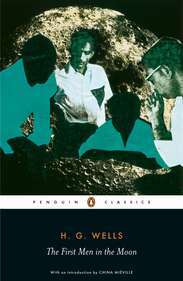
4. The First Men in the Moon -1901
H.G. Wells

The First Men in the Moon

Wells was my favourite author growing up. My brother would go to the public library every weekend and run for the Sci-Fi section to see if we could find any undiscovered Wells stories.

Perhaps this novel sparked my fascination with the moon. In Wells’ story, a scientist invents an anti-gravity material called, cavorite. Obviously the best use for such a thing is to make a little anti-gravity ship and go to the moon. And that’s exactly what another dude convinces the scientist to do.

Turns out there’s some crazy shit going down on the orbiting rock and the two are enslaved by some insect-dude farmers who were herding their cows (the cows are actually just big blobs of lard).

It’s a good thing we went to the moon already and discovered this was all false. Otherwise, I’d be having nightmares of lardcows and insect dudes every time I look up into the sky at night.

“Describe this book in a single word? Ridiculous. I have never read science fictions. I have read very few classics. And then I went and randomly picked up this classic sci-fi written in 1901. Well, I’m very glad I did so because The First Men In The Moon by Sir H.G Wells is as amazing as it is ridiculous.”
Veronica the Geek (Goodreads)

It’s also noteworthy to mention that there’s a film adaptation, First Men on the Moon (1964), which is worth a watch. It definitely gave me nightmares of gigantic caterpillars and weird crystal hive mind caves as a kid.

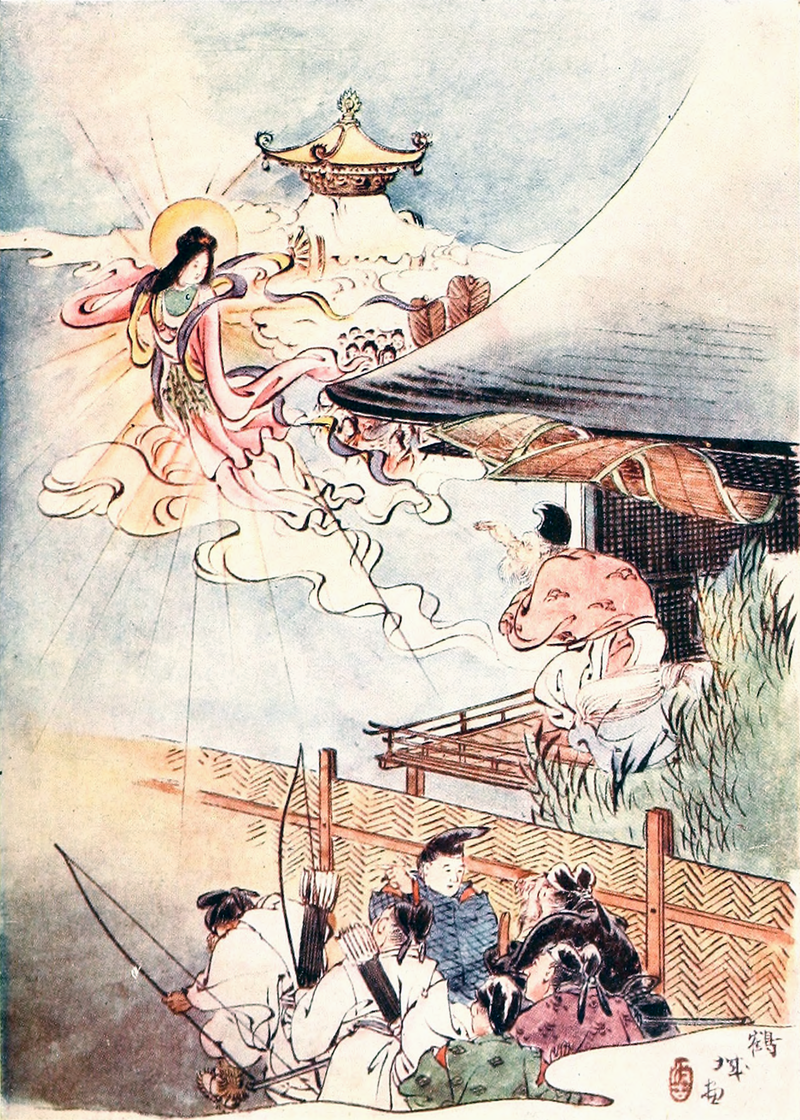
5. The Tale of the Bamboo Cutter -10th Century
Anonymous

Not a novel, but I had to include it in this list. Besides being a moon fan, I’m also an ancient tale fan, so bonus points as this is the oldest surviving Japanese prose narrative.

In ancient Japan they didn’t know that moon babies are born inside of bamboo stalks so a bamboo cutter is surprised when he cuts one open and finds a tiny girl. Luckily we know better now.

The cutter then raises the girl as his own and she grows into the most beautiful thing ever because bamboo juice is great for the skin. Her beauty attracts all the men who want to do things to her that they can only do once they’re married. But, bamboo girl will have none of it. Only a moon husband will do.

I can’t say much more without giving too much away, but I definitely recommend checking it out. Plus, it’s the story of how Mount Fuji got its name.

All in all, whoever crafted this story was on some kind of crazy trip. Moon people born in bamboo stalks on earth? That’s a stretch!

This is a super great story!
-Unkown Japanese Person (10th Century Japan)

6. Mutineers’ Moon -1991
David Weber

Mutineers' Moon (Dahak, #1)

This book answers a lot of questions that science hasn’t yet figured out.

What is the moon? A gigantic sentient spaceship of course!

Where did humans come from? 50,000 years ago, there was a mutiny in the moon space ship and a bunch of humans were like, “We’re going to live on earth.”

Are evil aliens coming to destroy us all? Yes, and the only way to save humanity is by faking the death of an astronaut!

See? Everything makes sense now.

I always knew there was more to the moon than its boring orbit thing. I mean, it does cause nice eclipses every once in a while, but being a gigantic, ancient spaceship is way cooler.

Without getting into the complexity of this novel (there’s a lot of different conflicts to keep up on. It’s more of a military sci-fi thing), let me just say that this is possibly the coolest concept I’ve come across for the moon.

“One of my all-time favorite series. I’ve likely re-read this book (in the omnibus “Empire from the Ashes” edition) more than any other in my collection.”
Ross Wilson (Goodreads)

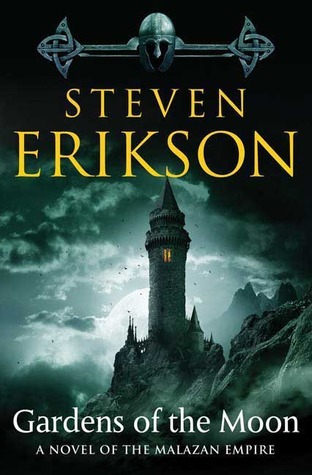
7. Gardens of the Moon -1999
Steven Erikson

Gardens of the Moon (The Malazan Book of the Fallen, #1)

There’s not as much moon in this novel (or the 10-part series) as there is a gigantic floating rock with an impenetrable fortress inside of it, called Moon Spawn (there are other floating fortresses too, but this one is the most badass).

I mean, the moon is basically a big floating rock anyway, so Moon Spawn fits the description perfectly.

If I were going to try to rule the world, this is exactly what I would build. What makes Moon Spawn more terrifying is that thousands of humongous ravens live on it. Have you ever been out for an early morning for a jog when you turn a corner and a dozen crows are silently staring at you from dead tree? Now imagine that X 3,000!

There’s an awesome battle in Gardens of the Moon against Moon Spawn. A bunch of mages are like, “We can overthrown this thing” and set it on fire. No big deal though, the fortress just floats away and continues to be totally awesome somewhere else (well, until it crashes into the sea and becomes a bunch of treasure-filled islands, which is also pretty rad).

Here’s a sweetass depiction of the battle. Notice the hoards of ravens?

(I tried to find the source of this image, but couldn’t. If you know it, please tell me!)

This is a series to get into if you like super high fantasy. The world building is completely next level (especially because the series is 10 books long). There’s even a whole 3,000+ page wiki dedicated to Erikson’s series.

“There’s a loooot of (incredible) characters, places, concepts, gods, demons – and what little exposition there is usually comes after the fact, but I’ve never been in a more vividly realised / immersive fantasy world.”
Sam Ashurst (Goodreads)

Special Mention:

In Cloud Atlas (2004, David Mitchell) advertisements are beamed onto the moon from a dystopian Korea.

Want updates? Subscribe below! (I promise I won’t sell your email on the black market).

Go back

Your message has been sent

Warning
Warning

Warning.

2015 is OVER!

Heyo my fellow writers!

If you’re like me, you’re reflecting on everything you’ve done this past year.

For me, I think this is my biggest year of accomplishment yet. I hope it sets a precedent for a super successful 2016!

This past year, I discovered what I really want to do with myself. For years I’ve dabbled in many different arts. Here are just a few of my hobbies over the past few years:

  • Kick boxing, soccer, softball, archery (got pretty good at getting a bull’s eye!)
  • Painting giant murals, sculpting horses, high-fashion photography with amateur models from Model Mayhem
  • I produced three Short films, and created over 50 stop motion animation
  • Plus, I took up calligraphy and I’m half way through a writing a Tome of Wizard Spells

But, after all these activities, meeting new people, learning new skills, and trying different things, only one thing has stuck with me: writing.

Writing! I didn’t think I’d ever be a writer, especially after spending years perfecting my craft with Stop Motion Animation. But writing it is.

After writing crept up to my window at night, snuck through the crack and slipped into my head unnoticed, I’ve taken it up as more than a passion.

And this is the year that I really kicked off my writing career. Here just some of my accomplishments (even meagre as they seem, they’re baby steps to something greater!)

  • I finally took the novel I’d be casually working on over the past 10 years more seriously and finished it
  • I wrote nearly 50 short stories and flash fiction pieces and sold 4 of them (not to mention that I’ve been rejected dozens of times!)
  • I self-published my own book, got it to the top seller in its category while it was free, and then sold nearly a dozen copies
  • I started a patreon and have $23 of support for each of my flash fiction pieces I post
  • I created my first course on how to get an agent
  • I got over 300 followers on my Twitter account
  • I joined a writing group that meets every two weeks to critique each other’s work
  • I also started this blog!
  • And last, but not least, I’ve improved my writing GREATLY

My gosh, I’m certain there’s even more. But what I’ve learned is that you don’t get anywhere without hard work and persistence. I hope I can keep up in 2016!

Let me know what accomplishments you’ve made this past year too!

Happy Writing!

Octotea


A Shortcut to Getting Published

You’ve just finished your first novel. Your next step is getting published, right?

Wrong! There’s so many other steps you need to do after finishing your novel. What about finding an editor? What about agents? What about self-publishing?

All these questions were going through my mind earlier this year.

I spent months and months trying to figure out what to do with my first completed novel. Writing it was one thing. I hardly believed I would ever even finish it, that I never even thought about getting it published.

What I needed was a guide to help me understand everything I had to do.

Unfortunately I couldn’t find one on the internet. Believe me, I did plenty of research… this past year, I…

  • Read hundreds of blog posts
  • Searched through dozens of forums and asked tonnes of questions
  • Consulted with published authors and agents
  • Talked with my writing peers about what they were doing
  • and so much more…

What I wish I would have found (which I didn’t), was an ALL-IN-ONE guide on everything I needed to do to go from the finished-my-first-novel phase to getting-my-first-agent phase.

I spent months learning exactly what to do, what would work, what wouldn’t work, and I’m proud to say that I’m currently in the query phase. And while I don’t have an agent yet, I have had a few that have been interested in my novel.

So, in the mean time, I’ve put together a complete guide on everything I’ve learned to get myself to this point.

So, if you’ve just finished your first novel, this guide is perfect for you! I’ve been in your shoes. I know the confusion, the hesitation, the plain not-knowing-what-to-do. BUT! Now I’m miles ahead.

This guide will put you miles ahead too.

So, what are you waiting for? Take a look at my Ultimate Guide on how to Publish Your First Novel.

Finished your first manuscript?

killer queryYou need to know how to write a killer query letter!

  • Learn the 3 step process
  • Know how to format your query in a professional manner
  • Read examples of other killer queries
  • Plus tips & tricks to get ahead & more! 

    Go back

    Your message has been sent

    Warning
    Warning

    Warning.


5 Tips For Writing A Killer Short Story Intro

If you’re like me, you write a lot of short stories – like at least one a week!

I’ve been fortunate enough to be involved in a writing group that helps me critique my work. This not only means that I receive lots of tips on my writing, it also means that I’m constantly reading drafts of other people’s short stories ALL THE TIME!

And I’ve learned a few things. Actually, I’ve learned a lot!

And perhaps one of the most important things I’ve learned is how well the intro to your short story has to be (we’re talking the first 1 or 2 paragraphs).

Think of the intro to your short story as the first bite of a new food. You’re curious. You’re sceptical. You’re ready to spit out your first bite and throw the entire dish away if you don’t like it. BUT! If that first bite tastes delicious, you’ll gobble everything else up as fast as you can.

That’s what the intro to your story is.

If it’s got a fantastic hook and glimpses of something great, your reader will keep reading at breakneck speed.

If it’s just “meh,” you’ve already lost your reader. With millions of other things to read on the internet, or in stores, why would anyone ever keep reading “meh”?

So, how do you make your intro super great? Well, to be honest, I’m still learning. But, I’ve also learned a heck of a lot so far, and my introductions are getting better. I’m writing better hooks. I’m retaining readers for longer. I can see a clear distinction between what I wrote even a month ago and what I’m writing now.

Every time I write an introduction, I use a checklist. While some of the items may seem a bit obvious, it’s amazing how many times I get too excited about one aspect of what I’m writing and forget to include them.

Checklist for How to Write a Short Story:

  1. Introduce The Setting
    • where is the reader? Be quick about it, no extensive descriptions! While it is okay to add some description (ie. “Moss hung on the stone wall below the cathedral windows”), the reader should never EVER have to guess where they are.
  2. Introduce the Main Character Right Away!
    • Who are they? What do they care about (motivation)? Why do I care about them?
  3. Introduce Character’s Situation
    • This must be something that we’ve all found ourselves in and can relate to. Introduce this immediately! This makes the reader feel connected to the character, “Yup, I’ve been there.”
  4. Introduce What’s Different
    • This can be about how the character acts in the situation that the reader might not have thought of OR how the situation forces the character to act in a way that the reader would wonder what they would do
    • This lets the reader know what kind of character the main character is and how they differ from them
  5. Reveal Every Mystery Right Away Except for One
    • Don’t leave the reader guessing about where they are, the motivations of the character, or anything else. This is a short story, and your reader will start off being confused and staying confused until you answer all their questions.
    • While you should reveal everything upfront, it’s a good idea to leave only ONE THING a mystery. This will help keep the reader’s attention as they want to figure out what it is.

Now, this list isn’t the be-all and end-all of short story introductions, but it is a good start to keep you on track.

So, what are you waiting for? Take a short story you’ve written and compare the introduction to this checklist and see what matches up.

Happy Writing!

Finished your first manuscript?

killer queryYou need to know how to write a killer query letter!

  • Learn the 3 step process
  • Know how to format your query in a professional manner
  • Read examples of other killer queries
  • Plus tips & tricks to get ahead & more! 

    Go back

    Your message has been sent

    Warning
    Warning

    Warning.


Write Your Query Letter in Half the Time with This Ultimate Guide on How to Publish Your First Novel

You’ve finished your first novel, but you don’t know what to do next.

I’ve been in your shoes. The above statement described me perfectly after I’d finished writing my first novel.

I spent months of research, reading blogs, consulting with authors, following & writing agents, and talking with other people who were on the same journey as me.

This free guide is everything I’ve learned about the whole after-finishing-my-novel-and-now-I-want-to-get-published process.

It’s your cheat sheet to skip trying to figure what to do on your own. 

So, check out this free, ultimate guide on How to Publish Your First Novel and learn everything about how to get your first agent that will push you full steam ahead into a bestseller!

The Ultimate Guide on How to Publish Your First Novel

Finished your first manuscript?

killer queryYou need to know how to write a killer query letter!

  • Learn the 3 step process
  • Know how to format your query in a professional manner
  • Read examples of other killer queries
  • Plus tips & tricks to get ahead & more!

    Go back

    Your message has been sent

    Warning
    Warning

    Warning.


Every Author’s Must-Do Checklist

After years of writing (and receiving a mountain load of feedback), I’ve created a guide on how to write better.

Here’s what I’ve learned and try to follow so far. Add your tips to the comments!

STORY INTRODUCTION

  • Introduce setting – where is the reader? Be quick about it, no extensive descriptions
  • Introduce character right away. Who are they? What do they care about (motivation)? Why do I care about them?
  • Now introduce character situation that we’ve all found ourselves in and can relate to. Immediately! This makes the reader feel connected to the character, “Yup, I’ve been there.”
  • Now introduce what’s different about how the character acts in the situation that the reader might not have thought of OR how the situation forces the character to act in a way that the reader would wonder what they would do
    • This lets the reader know what kind of character the main character is and how they differ from them

STORY PROGRESSION

  • Explain what is happening through dialogue or action – do not “tell” back story or what is happening!
  • Don’t tell the reader everything upfront, let them discover where they are.
    • John was scuba diving at the great barrier reef VS swarms of fish danced around John’s arms. He turned to examine the blue corals that clung to the rock cliff.
  • Every page and situation must
    • contain no adverbs
    • contain no descriptive ways to explain dialogue other than, “he said” “she said”
    • Start late
    • Leave early
  • Take time and really think through the setting. This way you’ll be one step ahead of the reader and they’ll think, “that makes total sense where they are, I didn’t think of that yet!”
    • If someone is hiking, think about everything they could possibly bring. If someone is in a new setting, think of everything they could possibly see – then slowly reveal these things.
  • Write freely – then go back and trim everything but what’s absolutely necessary
  • List the most expecting thing that might happen next. DON’T let that happen! It’s too easy
  • At any point in the story, the reader must know what’s at stake and what must be done to solve the main problem. You’ll lose them if the path is ambiguous
  • The main character tries to achieve his/her goal, but the exact opposite happens and he/she has to regroup and form a new plan, being extra vulnerable, but coming out stronger
  • Never let the main character reflect on what’s happened to him/her, until they’re forced to reflect from something bad happening to them
  • In the ending, the character must come back to an original problem/situation. The only difference is that they’ve changed how they acted based on their character arch and what they learned.

MAIN CHARACTER(S)

  • Never force the main character to create situations until they’ve come through their arch. Every situation is forced upon the character and he/she is only forced to choose how to act
  • The main character doesn’t have to succeed, he/she just has to try his/her hardest (until the climax)
  • You character needs a backstory – what makes them who they are today?
  • The main character should be a reflection of the reader and get into situations the reader can see themselves getting into given the setting. The main difference is that the main character is the reader’s ideal. He/she is slightly better at doing what they do than the reader.
  • The main character can get into cliché problems, but never solve them in cliché ways
  • The main character is decisive, not passive.
  • The main character must always be honest with himself/herself. You can’t lie to the reader
  • The reader should always know slightly more than the main character so that they can’t wait for the main character to find out (kinda like how you can’t wait to tell a good friend something you know and they don’t)

SECONDARY CHARACTERS

  • Every secondary character must act in their expected ways
    • if a character is easily angered, they are always easily angered – the reader shouldn’t have to guess how they’ll act
  •  Secondary characters can create situations for the main character

ANTAGONIST

  • The antagonist, no matter how vile, must always have some redeeming quality.

 Traditional Storytelling Framework

  1. Your character is in their comfort zone
  2. They want something they can’t have
  3. To try and get it, they embark on a journey into unfamiliar territory
  4. They realize they’ve entered into something beyond them, but they master it
  5. They are faced with a big decision – get what they want, or do the greater good
  6. Climax! They do everything they can possibly do to do the greater good and pay a heavy price for it
  7. They travel back home
  8. They reach home, but realize they’ve changed

Finished your first manuscript?

killer queryYou need to know how to write a killer query letter!

  • Learn the 3 step process
  • Know how to format your query in a professional manner
  • Read examples of other killer queries
  • Plus tips & tricks to get ahead & more! 

    Go back

    Your message has been sent

    Warning
    Warning

    Warning.


How I got my first Flash Fiction Published

I’ve had 4 of my short stories published now — I’m just at the start of my writing career.

I was first published nearly a year ago after pushing myself to write some short stories as I worked on my first novel (figured I might as well start getting my name out there). I tried writing about the most outlandish things in order to catch attention. A story about a hopelessly romantic giraffe and the blue kite that flies into his life. Another about an entrepreneurial vampire midget trying to market her frozen treats called, Bloodsicles.

All my premises were WAAAAAY out there!

Some were so absurd I’m sure they barely made sense to even a seasoned Hallucinologist (and those people spend a lot of time trying to make sense of things).

I figured that the best way to capture attention was by being unique, but I wasn’t sure if there really was a market for the fantastically absurd, so I started doing some internet research.

I discovered that people are dying to pay for stories! DYING!

My hopelessly romantic giraffe story – yeah, there’s a cult following of long necked lovers lurking in a zoo chat group. My entrepreneurial vampire midget story – yeah, small business tips in gothic settings are trending somewhere in Panama.

Okay, so I made some of that up, but the point is that I discovered that there’s a market for nearly anything, which was exciting! I spent a night or two’s worth of internet research and compiled a list of a dozen places that accepted quirky fantasy stories, then I bombarded them with submissions.

My first publication WITH PAY (muahaha!) was a story I wrote with the prompt of two words: RED ICE.

Somehow with those two words as my inspiration, I ended up creating a story about a man who bought a house on the edge of a volcano with the intent of hosting a suicidal dinner party for all his friends as it was erupting. Unfortunately the volcano erupts before his guests arrive, and he’s left lamenting over his daddy-problems with his mother over the phone while his robot servant fixes him a sandwich.

If that story isn’t crazy enough of a premise, I don’t know what is.

It took me 7 months to find a publisher that wanted to buy it. In the process, I was rejected 4 times. Even the paying publisher requested a lot of edits before he agreed to publish it.

The final review from the editors was that they enjoyed the weirdness of the situation. It was refreshing and fun to think about. It also brought up questions of what type of society would be okay with suicidal parties as commonplace—distant futures where people live through holograms? Weird aliens that have multiple lives? People that live hundreds of years and get bored with life? I got some really interesting comments from both the editors and readers after it was published.

The editors also liked that they could connect with the character on a more grounded level: his daddy issues, his condescending attitude towards his robot, the way his mother spoke to him.

Overall, the main reason it got published (according to the publisher), was that it was unique. It was something different, something refreshing, something that fit their audience. The other publishers rejected it because they didn’t feel their audiences would like it. If I had given up after my first rejections, I wouldn’t have been published.

So, how much did I get paid? A whopping $3.00.

But, that’s okay. It was the first time I got paid for something I wrote. It also gave me inspiration knowing that there really is a market for my work. I’ve since been published three more times and starting to get my name out there.

As always,

Happy Writing!

Finished your first manuscript?

killer queryYou need to know how to write a killer query letter!

  • Learn the 3 step process
  • Know how to format your query in a professional manner
  • Read examples of other killer queries
  • Plus tips & tricks to get ahead & more! 

    Go back

    Your message has been sent

    Warning
    Warning

    Warning.